Pullharder.org

A Culmination of Experiences Earned in the Pursuit of Climbing

Climbing                  Boutique                  Off Route                  Site Index

Belay Anchor Setups

May 17th, 2009 by Nate

Every week there’s a new post on rockclimbing.com detailing a bigger, more complicated, heavier, more time consuming, and lamer way to build belay anchors.  For example:  http://www.rockclimbing.com/cgi-bin/forum/gforum.cgi?post=2137809;page=unread#unread

I don’t think these people understand that the point is to go climbing, not fuss with your gear all day.

Here’s the anchor setup that I use, and everybody that I climb with uses:

It’s simple, fast, and super light.  It’s a knotted sliding X with a light mammut sling, two Camp Nano 23 biners, and a 39 gram trango superfly locker. Weighs 116 grams total.

Got a third piece?  Clip it in loose somewhere to the anchor or clove hitch the rope to it.  Think you’ll be slinging stuff for anchors?  Take out the knots.

Here it is tripled up:  No bigger or bulkier than a quickdraw.
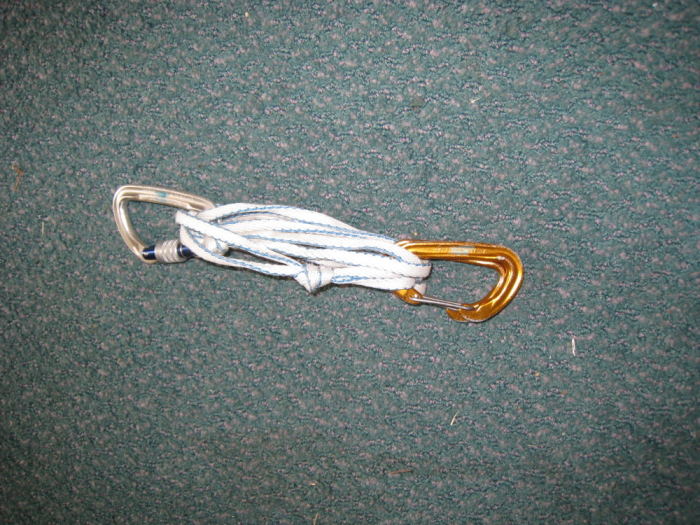
DONE.  CLIMB ON.

Posted in Gear | 21 Comments

Share

21 Responses

  1. Reply
    Shay says:
    May 17, 2009 at 7:26 pm

    Good point Nathan Daniel. The point is to go climbing, not mess with gear.
    The only point I will make is that its freaking impossible to get those knots out. So taking the knots out in order to sling something, isn’t really an option. In my opinion.

  2. Reply
    Charles says:
    May 18, 2009 at 11:08 am

    I agree when you want a third piece (me) I just clip it below any of the knots or you can obviously just add it next to the other pieces at the top. If placements are really spread out just sacrifice a runner and bring another piece into the system. This system rawks. And yes make use of the rope too. Thanks Nate!

    I am pretty sure I saw a quadralette hooked to a horse one time when I went to a farm. Sweet.

  3. Reply
    Josh says:
    May 18, 2009 at 7:34 pm

    I’ve gotten the knots out in under 2 minutes each when adjusting them to move the wear and tear. Definitely not an option when trying to move fast, but they can be removed. If you need to tie something off, use the rope.

  4. Reply
    Konstantin says:
    May 18, 2009 at 8:30 pm

    time to clean the rug!

  5. Reply
    Scotty says:
    May 19, 2009 at 12:12 am

    The important point is that this system is redundant. It acts as 2 slings for the price of 1. You won’t find a better deal anywhere.

  6. Reply
    Konstantin says:
    May 19, 2009 at 8:55 am

    Trango alpine equalizer, $26 at amazon, before that i was doing Nate`s set up.

  7. Reply
    Nate says:
    May 19, 2009 at 2:38 pm

    The Trango alpine equalizer looks okay too. But it’s heavier, at 105g without the biners and it doesn’t have the same redundancy as this setup. And it costs more and is more specialized, whereas this is just a sling.

    Anyway, the point is not to get into a discussion about the details of redundancy, equalization, blah blah blah, it’s to use something that’s “good enough” and climb on.

  8. Reply
    Nate says:
    May 19, 2009 at 2:41 pm

    Yeah i’ve been able to take the knots out without much trouble too. You’d want to do it before leaving the ground on a climb where you think you’ll be slinging stuff a lot.

  9. Reply
    gil says:
    May 20, 2009 at 9:13 am

    I love the alpine equalizer, especially for routes you know have bolted anchors. I have also used a 3-point sliding X with a cordalette. The main point is to be able to quickly analyze your situation and be able to maximize the reduction of risk in the shortest time possible. I feel fine using a non-redundant sliding X if both pieces are solid and the terrain is relatively easy. A self-equalizing anchor gives the belayer room to shift positions at the belay as needed and may even prevent complete loading of the weakest piece in the system, which I believe is safer overall than redundancy. remember, there is no such thing as safety in the mountains, only the reduction of risk.

  10. Reply
    Buster says:
    May 20, 2009 at 9:12 pm

    yeah, that R.C.com quardalette thing is ridiculous. Equally ridiculous is the trango alpine equalizer, which is basically the same thing only produced commercially. The most important thing to remember about anchors is that the pieces of pro are what matters. If you have solid pieces, you can pretty much clip anything to them and be fine. If you have shit pieces, all the fancy equalizing, redundant, shock limiting set ups in the world aren’t going to help much. That being said Im a big fan of using simple anchoring methods and simple materials like slings and cordelette. I can use a cordelette to reinforce / build a rap station, ascend a rope, pass a knot in a damaged rope while rappelling, pass a knot on a long lower, raise a hurt / tired climber, do a short lower out, improvise aiders / adjustable daises, create an awesome tether for tandem rappelling, sling a tree or rock, and of course build an anchor. All you can do with a fancy pre made equalizer is clip pieces together, and only if there close enough to do so. They are awkward to rack, heaver than anything else, and cost about 4 times as much as a 21 foot piece of cord, and have about the same life span.

  11. Reply
    Buster says:
    May 20, 2009 at 9:12 pm

    P.S. – nano biners are the shit!

  12. Reply
    Nate says:
    May 21, 2009 at 12:14 am

    Supposedly there are some metolius biners out that weigh only 20 grams…

  13. Reply
    Dan says:
    May 22, 2009 at 8:07 am

    A little off the current topic, but have you guys seen the data the guy generated on rockclimbing.com about failures in Aliens??? Worrisome if you climb on those…

  14. Reply
    Scotty says:
    May 24, 2009 at 12:50 am

    Don’t even get Josh started!

  15. Reply
    Dima says:
    May 25, 2009 at 11:33 pm

    +1 to AE

  16. Reply
    Andy says:
    July 10, 2009 at 7:21 pm

    Is that just a 48 in. runner? it seems longer. is it?

  17. Reply
    Nate says:
    August 9, 2009 at 7:57 pm

    Yep, it’s a 48 inch runner. One of the super skinny ones. Gotta replace it more often than normal because the knots keep the wear in the same place every time.

  18. Reply
    Stein says:
    November 8, 2009 at 11:07 am

    Luke and I field tested this setup on Free Rider this last week-end: it worked great.
    We ended up simultaneously belaying (auto-block) and hauling off of the power point, and would anchor ourselves off of the wire biners.

  19. Reply
    skye says:
    May 16, 2010 at 6:43 pm

    Why not add a bit of coaches tape over the knots to add a bit of temporary durability?

  20. Reply
    Josh says:
    May 16, 2010 at 10:00 pm

    Because I’ve used this setup for longer than the manufacturer recommends without wear at the knots being an issue. I typically move the knots once in a while so that the wear is distrubuted across the sling. I’ve retired this setup due to age twice before sling fuzz warranted a retirement. I’m currently on my 3rd set of 4′ slings.

  21. Reply
    Jacob says:
    July 21, 2010 at 3:08 pm

    Been using this setup as well. Very quick.

    Not an identical situation, but DMM has a pretty interesting video about dynema slings, knots, ect… food for thought that every climber should be aware of.

    http://www.dmmclimbing.com/video.asp?id=5

  22. Leave a Reply

    Click here to cancel reply.

    Please note: Comment moderation is enabled and may delay your comment. There is no need to resubmit your comment.

 
Login | Recent Comments | Calendar | Featured | Who | Contact